
Last updated on June 19th, 2025 at 06:51 am

Being a professional lacrosse coach with years of experience, one of the most frequently asked questions from new players is: What are offensive formations in lacrosse? In this guide, I’ll help you understand the basics of lacrosse offensive formations. We’ll cover why offensive strategies are important and the key principles that make them work. Let’s dive in!
Importance of Offensive Strategies
Offensive strategies in lacrosse are crucial because they help a team score goals. By using different formations, players can create opportunities to shoot and score. These strategies also help to confuse the defense, making it easier to find openings. Understanding and practicing these strategies can make a big difference in a game.
Key Principles: Movement, Spacing, Communication
- Movement: Players need to keep moving to create opportunities. Standing still makes it easy for defenders to block you. By constantly moving, you can find gaps in the defense and make it harder for them to keep up.
- Spacing: Good spacing means players are spread out on the field. This prevents defenders from easily covering multiple players at once. Proper spacing allows for better passing and shooting opportunities.
- Communication: Talking to your teammates is essential. By communicating, players can coordinate their movements and make sure everyone knows the plan. This helps in executing strategies effectively and avoiding confusion on the field.
Offensive Formations
I understand the importance of choosing the right offensive formation for your team. Each formation has its own set of benefits and challenges. Here’s a summary of some key offensive formations in lacrosse:
1-4-1 Offensive Set
The 1-4-1 offensive set is a strategic formation used in lacrosse to maximize scoring opportunities and create space on the field. This formation involves positioning one player at the top of the offensive zone, four players across the middle, and one player near the crease. Here’s a detailed look at how this formation works, its benefits, and its potential drawbacks.

Formation Layout
- Top Player (1): Positioned at the top of the offensive zone, this player often initiates the offense. They are typically a strong dodger who can drive towards the goal or distribute the ball to teammates.
- Middle Players (4): Four players are spread out horizontally across the middle of the field. These players are crucial for maintaining spacing and creating passing lanes. They can also cut towards the goal or set picks to free up teammates.
- Crease Player (1): Positioned near the crease, this player is often a skilled finisher. They are responsible for quick shots and rebounds, taking advantage of any defensive lapses near the goal.
Benefits
- Creates Space for Dodging: The 1-4-1 set spreads out the defense, giving the dodger more room to maneuver and attack the goal. This is particularly effective for players who excel in one-on-one situations.
- Effective Against Zone Defenses: By forcing defenders to cover more ground, this formation can disrupt zone defenses. It creates gaps and opportunities for offensive players to exploit, making it easier to penetrate the defense and create scoring chances.
Cons
- Vulnerable if Top Dodger is Defended Well: If the primary dodger is effectively marked, it can limit the effectiveness of this formation. The offense may struggle to generate scoring opportunities if the defense can neutralize the top dodger.
- Risk of Fast Breaks: With players spread out, there’s a higher risk of turnovers leading to fast breaks by the opposing team. If the offense loses possession, the defense can quickly transition to offense and exploit the open field.
Tips for Success
- Practice Dodging and Shooting: Ensure that the top player is proficient in dodging and shooting. This player often initiates the offense and needs to be a threat to score.
- Maintain Spacing: Emphasize the importance of spacing to all players. Proper spacing allows for better ball movement and creates more opportunities for scoring.
- Communicate: Encourage constant communication among players. Effective communication helps in coordinating movements and executing plays.
- Mix Up Formations: Avoid becoming too predictable by incorporating different offensive sets. This keeps the defense guessing and prevents them from easily countering your strategies.
2-2-2 Offensive Set
The 2-2-2 offensive set is another popular formation in lacrosse, known for its balance and versatility. This formation involves positioning two players at the top, two in the middle, and two near the crease. Here’s a detailed look at its advantages and disadvantages:

Formation Layout
- Top Players (2): Positioned at the top of the offensive zone, these players often initiate the offense. They are typically strong dodgers and passers who can drive towards the goal or distribute the ball to teammates.
- Middle Players (2): Positioned in the middle of the field, these players are crucial for maintaining spacing and creating passing lanes. They can also cut towards the goal or set picks to free up teammates.
- Crease Players (2): Positioned near the crease, these players are often skilled finishers. They are responsible for quick shots and rebounds, taking advantage of any defensive lapses near the goal.
Advantages
- Balanced and Versatile: The 2-2-2 set provides a balanced formation that can adapt to various defensive strategies. It allows for flexibility in offensive plays, making it harder for the defense to predict and counter.
- Multiple Scoring Opportunities: With players positioned at different levels of the field, this formation creates multiple angles for attacking the goal. It allows for a variety of offensive plays, including dodges, cuts, and quick passes, increasing the chances of scoring.
Disadvantages
- Predictability Without Good Movement: If players do not maintain good movement, the 2-2-2 set can become predictable. Static players make it easier for the defense to anticipate and counter offensive plays.
- Requires Strong Individual Skills: This formation demands high skill levels from all players. Each player needs to be proficient in dodging, passing, and shooting to effectively execute the offensive strategies.
Tips for Success
- Emphasize Movement: Encourage constant movement among players to keep the defense off-balance. Players should be cutting, setting picks, and rotating positions to create dynamic scoring opportunities.
- Maintain Spacing: Proper spacing is crucial for the success of the 2-2-2 set. Ensure that players are spread out to create passing lanes and avoid defensive pressure.
- Communicate: Effective communication helps in coordinating movements and executing plays. Players should constantly talk to each other to ensure everyone is on the same page.
- Mix Up Plays: Incorporate a variety of offensive plays to keep the defense guessing. Use different dodges, cuts, and passing sequences to create scoring opportunities.
2-3-1 Offensive Set
The 2-3-1 offensive set is a versatile formation that balances the attack and leverages the strengths of midfielders. This formation involves positioning two players at the top, three across the middle, and one near the crease. Here’s a detailed look at its pros and cons:

Formation Layout
- Top Players (2): Positioned at the top of the offensive zone, these players often initiate the offense. They are typically strong dodgers and passers who can drive towards the goal or distribute the ball to teammates.
- Middle Players (3): Positioned across the middle of the field, these players are crucial for maintaining spacing and creating passing lanes. They can also cut towards the goal or set picks to free up teammates.
- Crease Player (1): Positioned near the crease, this player is often a skilled finisher. They are responsible for quick shots and rebounds, taking advantage of any defensive lapses near the goal.
Pros
- Balanced Attack: The 2-3-1 set provides a balanced offensive approach, allowing for both perimeter and crease play. This balance makes it harder for the defense to predict and counter offensive moves.
- Suitable for Teams with Strong Midfielders: This formation leverages the strengths of midfielders, who can use their speed and skills to create scoring opportunities. Midfielders can dodge, pass, and shoot effectively from the middle of the field.
Cons
- Challenging to Maintain Spacing: Proper spacing is crucial for the success of the 2-3-1 set. Players need to be aware of their positions and maintain distance from each other to create passing lanes and avoid defensive pressure.
- Needs Good Communication: Effective communication is essential to coordinate movements and execute plays. Players must constantly talk to each other to ensure everyone is on the same page and to avoid confusion on the field.
Tips for Success
- Emphasize Movement: Encourage constant movement among players to keep the defense off-balance. Players should be cutting, setting picks, and rotating positions to create dynamic scoring opportunities.
- Practice Spacing: Work on drills that emphasize proper spacing. Players should understand the importance of maintaining distance from each other to create effective passing lanes.
- Communicate: Foster a culture of communication on the field. Players should constantly talk to each other to coordinate their movements and execute plays effectively.
- Leverage Midfield Strengths: Utilize the skills of strong midfielders to drive the offense. Encourage them to take on defenders, create scoring opportunities, and distribute the ball to teammates.
1-3-2 Offensive Set
The 1-3-2 offensive set is a strategic formation that provides multiple dodging lanes and is particularly effective for teams with strong attackmen. This formation involves positioning one player at the top, three across the middle, and two near the crease. Here’s a detailed look at its benefits and drawbacks:
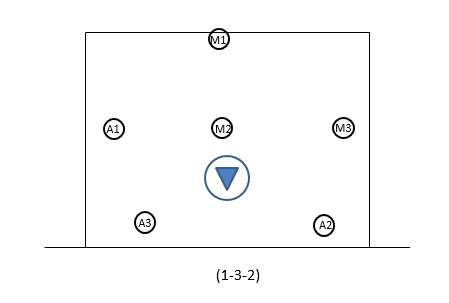
Formation Layout
- Top Player (1): Positioned at the top of the offensive zone, this player often initiates the offense. They are typically a strong dodger who can drive towards the goal or distribute the ball to teammates.
- Middle Players (3): Positioned across the middle of the field, these players are crucial for maintaining spacing and creating passing lanes. They can also cut towards the goal or set picks to free up teammates.
- Crease Players (2): Positioned near the crease, these players are often skilled finishers. They are responsible for quick shots and rebounds, taking advantage of any defensive lapses near the goal.
Benefits
- Multiple Dodging Lanes: The 1-3-2 set creates several dodging lanes, allowing players to attack the goal from different angles. This makes it harder for the defense to predict and counter offensive moves.
- Effective for Strong Attackmen: This formation leverages the strengths of attackmen, who can use their skills to create scoring opportunities. Attackmen can dodge, pass, and shoot effectively from various positions on the field.
Drawbacks
- Vulnerable to Fast Breaks: With players spread out, there’s a higher risk of turnovers leading to fast breaks by the opposing team. If the offense loses possession, the defense can quickly transition to offense and exploit the open field.
- Requires Precise Execution: The 1-3-2 set demands precise execution and good decision-making from all players on the field. Players need to be skilled in dodging, passing, and shooting to effectively execute the offensive strategies.
Tips for Success
- Emphasize Movement: Encourage constant movement among players to keep the defense off-balance. Players should be cutting, setting picks, and rotating positions to create dynamic scoring opportunities.
- Practice Spacing: Work on drills that emphasize proper spacing. Players should understand the importance of maintaining distance from each other to create effective passing lanes.
- Communicate: Foster a culture of communication on the field. Players should constantly talk to each other to coordinate their movements and execute plays effectively.
- Leverage Attackmen’s Strengths: Utilize the skills of strong attackmen to drive the offense. Encourage them to take on defenders, create scoring opportunities, and distribute the ball to teammates.
3-3 Offensive Set
The 3-3 offensive set is a balanced formation that provides opportunities for both inside and outside shots. This formation involves positioning three players at the top and three near the crease. Here’s a detailed look at its positives and negatives:

Formation Layout
- Top Players (3): Positioned at the top of the offensive zone, these players are typically strong shooters and passers. They can initiate the offense, drive towards the goal, or distribute the ball to teammates.
- Crease Players (3): Positioned near the crease, these players are often skilled finishers. They are responsible for quick shots and rebounds, taking advantage of any defensive lapses near the goal.
Positives
- Balanced Attack with Inside and Outside Shots: The 3-3 set provides a balanced offensive approach, allowing for both perimeter and crease play. This balance makes it harder for the defense to predict and counter-offensive moves. Players can take outside shots from the top or work the ball inside for close-range opportunities.
- Good for Teams with Strong Shooters: This formation leverages the strengths of strong shooters. With three players positioned at the top, it creates multiple shooting angles and opportunities for long-range shots. It also allows for quick ball movement to find the best shooting position.
Negatives
- Can be Predictable: If players do not maintain good movement and vary their plays, the 3-3 set can become predictable. Static players make it easier for the defense to anticipate and counter offensive plays. Teams need to mix up their strategies to keep the defense guessing.
- Needs Good Ball Movement: Effective ball movement is crucial for the success of the 3-3 set. Players need to pass quickly and accurately to create scoring opportunities. Poor ball movement can lead to turnovers and missed chances.
Tips for Success
- Emphasize Movement: Encourage constant movement among players to keep the defense off-balance. Players should be cutting, setting picks, and rotating positions to create dynamic scoring opportunities.
- Practice Spacing: Work on drills that emphasize proper spacing. Players should understand the importance of maintaining distance from each other to create effective passing lanes.
- Communicate: Foster a culture of communication on the field. Players should constantly talk to each other to coordinate their movements and execute plays effectively.
- Leverage Shooters’ Strengths: Utilize the skills of strong shooters to drive the offense. Encourage them to take on defenders, create scoring opportunities, and distribute the ball to teammates.
Open Set Lacrosse Offense
The Open Set offense is a flexible and dynamic formation that maximizes space on the field, allowing for effective dodging and cutting. This formation involves spreading players out evenly across the offensive zone without fixed positions, creating an open and fluid structure. Here’s a detailed look at its advantages and challenges:
Formation Layout
- Flexible Positioning: Players are spread out across the offensive zone, creating maximum space. There are no fixed positions, allowing players to move freely and adapt to the flow of the game.
Advantages
- Maximum Space for Dodging and Cutting: The Open Set creates a lot of space on the field, making it ideal for dodging and cutting. Players have more room to maneuver, which can lead to better scoring opportunities. This open space also makes it harder for defenders to double-team or trap offensive players.
- Effective for Strong Individual Dodgers: This formation is particularly effective for teams with strong individual dodgers. Players who excel in one-on-one situations can take advantage of the open space to drive towards the goal and create scoring opportunities.
Challenges
- Maintaining Structure and Spacing: One of the main challenges of the Open Set is maintaining structure and spacing. Without fixed positions, players need to be constantly aware of their spacing to avoid crowding and ensure effective ball movement. Proper spacing is crucial to keep the defense spread out and create passing lanes.
- Requires Strong Individual Skills: The Open Set demands high skill levels from all players. Each player needs to be proficient in dodging, passing, and shooting to effectively execute the offensive strategies. Strong individual skills are essential to take full advantage of the open space and create scoring opportunities.
2-1-3 Offensive Set
The 2-1-3 offensive set is a strategic formation that provides multiple scoring opportunities and leverages the strengths of both attackmen and midfielders. This formation involves positioning two players at the top, one in the middle, and three near the crease. Here’s a detailed look at its strengths and weaknesses:

Formation Layout
- Top Players (2): Positioned at the top of the offensive zone, these players are typically strong dodgers and passers. They can initiate the offense, drive towards the goal, or distribute the ball to teammates.
- Middle Player (1): Positioned in the center of the field, this player acts as a pivot, facilitating ball movement and creating opportunities for dodges and cuts.
- Crease Players (3): Positioned near the crease, these players are often skilled finishers. They are responsible for quick shots and rebounds, taking advantage of any defensive lapses near the goal.
Strengths
- Multiple Scoring Opportunities: The 2-1-3 set provides a variety of scoring angles and opportunities. With players positioned at different levels of the field, it allows for both perimeter and crease play, making it harder for the defense to predict and counter-offensive moves.
- Effective for Strong Attackmen and Midfielders: This formation leverages the strengths of both attackmen and midfielders. Attackmen can use their skills to create scoring opportunities near the crease, while midfielders can drive the offense from the top and middle of the field.
Weaknesses
- Challenging to Maintain Spacing: Proper spacing is crucial for the success of the 2-1-3 set. Players need to be constantly aware of their positions and maintain distance from each other to create passing lanes and avoid defensive pressure. Without good spacing, the formation can become congested and less effective.
- Needs Good Communication: Effective communication is essential to coordinate movements and execute plays. Players must constantly talk to each other to ensure everyone is on the same page and to avoid confusion on the field. Without good communication, the formation can break down and lead to turnovers.
Tips for Success
- Emphasize Movement: Encourage constant movement among players to keep the defense off-balance. Players should be cutting, setting picks, and rotating positions to create dynamic scoring opportunities.
- Practice Spacing: Work on drills that emphasize proper spacing. Players should understand the importance of maintaining distance from each other to create effective passing lanes.
- Communicate: Foster a culture of communication on the field. Players should constantly talk to each other to coordinate their movements and execute plays effectively.
- Leverage Strengths of Attackmen and Midfielders: Utilize the skills of strong attackmen and midfielders to drive the offense. Encourage them to take on defenders, create scoring opportunities, and distribute the ball to teammates.
Offensive Plays and Principles
As a professional lacrosse coach, I’m excited to share some key offensive plays and principles that can make a huge difference on the field. These strategies and fundamentals are essential for creating a dynamic and effective offense.
Key Plays
- Pick and Roll
- Description: The pick and roll is a fundamental play where one player sets a pick (or screen) for a teammate, who then uses the pick to drive towards the goal. The player setting the pick then rolls towards the goal, creating a scoring opportunity.
- Benefits: This play creates space for the ball carrier and can confuse defenders, leading to open shots or passes.
- Iso Play
- Description: An isolation (iso) play involves isolating a strong offensive player against a single defender. The isolated player uses their skills to dodge and create a scoring opportunity.
- Benefits: Effective for teams with strong individual dodgers who can take advantage of one-on-one matchups.
- The Two-Man Game
- Description: The two-man game involves two players working together to create scoring opportunities. This can include pick and rolls, give-and-go plays, or other coordinated movements.
- Benefits: Enhances teamwork and can create confusion for defenders, leading to open shots.
- Feeding from X
- Description: Feeding from X refers to setting up plays from behind the goal (the “X” position). The player at X can see the entire field and feed passes to cutters or shooters.
- Benefits: Provides a strategic vantage point for setting up plays and can catch defenders off guard.
- Fast Breaks and Transition Play
- Description: Fast breaks occur when the offense quickly transitions from defense to offense, often after a turnover. Players move the ball up the field rapidly to create scoring opportunities before the defense can set up.
- Benefits: Capitalizes on defensive disorganization and can lead to high-percentage scoring chances.
Core Principles
- Movement
- Importance: Constant movement is essential to create scoring opportunities and keep the defense off-balance. Players should be cutting, setting picks, and rotating positions to maintain a dynamic offense.
- Spacing
- Importance: Proper spacing ensures that players are spread out on the field, creating passing lanes and making it harder for defenders to cover multiple players. Good spacing allows for better ball movement and more effective offensive plays.
- Communication
- Importance: Effective communication is crucial for coordinating movements and executing plays. Players must constantly talk to each other to ensure everyone is on the same page and to avoid confusion on the field.
- Decision-Making
- Importance: Quick and smart decision-making is vital for a successful offense. Players need to read the defense, recognize opportunities, and make the right passes or shots. Good decision-making can turn a well-executed play into a scoring opportunity.
Additional Insights
I always strive to share valuable insights that can help you improve your game. Whether you’re exploring recommended goalie gear, dealing with growing pains in offense development, or learning the best lacrosse offensive plays, it’s also helpful to look at how the game is evolving through formats like Lacrosse Sixes, how it’s gaining global traction as an Olympic sport, and the importance of speaking the game’s language—something you can pick up quickly in Mastering Lacrosse Lingo.
Recommended Goalie Gear
Choosing the right gear is crucial for a lacrosse goalie. Essential equipment includes a well-fitted helmet with a throat guard, a chest protector, padded gloves, a sturdy goalie stick, the best shaft, and Lacrosse Cleats. Shin guards and athletic cups are also important for added protection. Investing in high-quality gear not only ensures safety but also boosts confidence and performance on the field.
Growing Pains in Offense Development
Developing a strong offense in lacrosse can come with its challenges. Teams often face growing pains such as learning to maintain proper spacing, improving communication, and making quick decisions under pressure. Patience and consistent practice are key to overcoming these hurdles. Coaches should focus on drills that enhance teamwork, movement, and strategic play to help players adapt and grow.
Best Lacrosse Offensive Plays
- Enhances Team Coordination: Effective offensive plays require seamless coordination among players. Plays like the pick and roll or the two-man game foster teamwork and ensure that players are working together to create scoring opportunities.
- Creates Scoring Opportunities: Well-executed offensive plays are designed to break down defenses and open up paths to the goal. Plays such as feeding from X or fast breaks capitalize on defensive weaknesses and create high-percentage scoring chances.
- Exploits Defensive Weaknesses: Strategic offensive plays aim to exploit gaps and weaknesses in the defense. By recognizing and targeting these vulnerabilities, teams can increase their chances of scoring and gain a competitive edge.
Many of the best offensive plays were shaped by icons of the game—just look at the Top 10 Lacrosse Legends.
FAQs
What offensive strategies are used in lacrosse?
Offensive strategies in lacrosse aim to create scoring opportunities by effectively moving the ball and players to exploit defensive weaknesses. Common strategies include the pick and roll, where one player sets a screen for another to create space; dodging, where a player uses speed and agility to bypass defenders; and motion offense, which involves continuous movement and passing to confuse the defense and create open shots. Teams also use set plays and formations like the 1-4-1 or 2-3-1 to structure their attacks and maximize scoring chances.
What is the 2-3-1 offensive set?
The 2-3-1 offensive set in lacrosse positions two attackmen behind the goal, three players across the middle, and one midfielder up top. This formation spreads out the offense, providing ample space for motion plays and creating opportunities for dodges and feeds from behind the goal. The 2-3-1 set is effective in maintaining ball movement and spacing, allowing players to exploit gaps in the defense and generate high-quality scoring chances.
What is the hardest position in lacrosse?
The hardest position in lacrosse is widely considered to be the goalkeeper. Goalies face the fastest shots and are responsible for making crucial saves under intense pressure. They must have quick reflexes, excellent hand-eye coordination, and the ability to read the game and direct the defense. The physical and mental demands of the position, combined with the responsibility of being the last line of defense, make it the most challenging role on the field.
What is a typical lacrosse formation?
A typical lacrosse formation varies depending on the team’s strategy and the game’s flow, but common formations include the 2-3-1, 1-4-1, and 3-3. The 2-3-1 formation, as previously mentioned, spreads players across the field to create space and opportunities. The 1-4-1 formation places one player up top, four across the middle, and one behind the goal, often used to overload specific areas and create dodging lanes. The 3-3 formation aligns three players up top and three down low, providing balanced spacing and multiple passing and shooting options.
Conclusion
Understanding lacrosse offensive formations is key to creating effective strategies. Each formation, like the 1-4-1, 2-3-1, and 3-3, has its own strengths and challenges. Key principles such as movement, spacing, and communication are essential for success. By mastering these formations and principles, teams can improve their coordination and scoring opportunities.

 Lacrosse Sixes: A New Era for the Ancient Lacrosse